Research Projects
Robust and scalable vision systems for complex visual scenes and long-form videos.
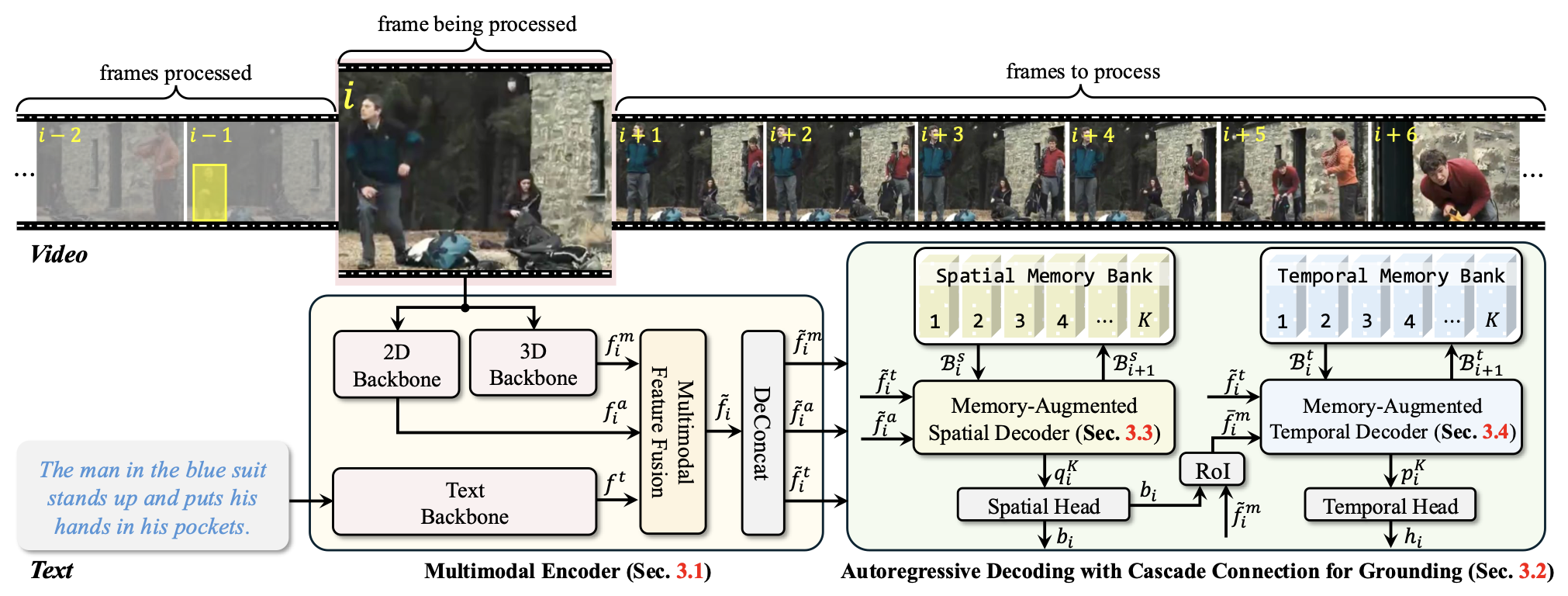
Real videos span minutes or hours and often mention several interacting objects. This line of work builds benchmarks and models that ground text-referred targets in space and time across long-form video, using streaming inference and memory selection to stay efficient.
Towards Long-Form Spatio-Temporal Video Grounding
Streaming autoregressive transformer with memory selection for grounding in long videos.
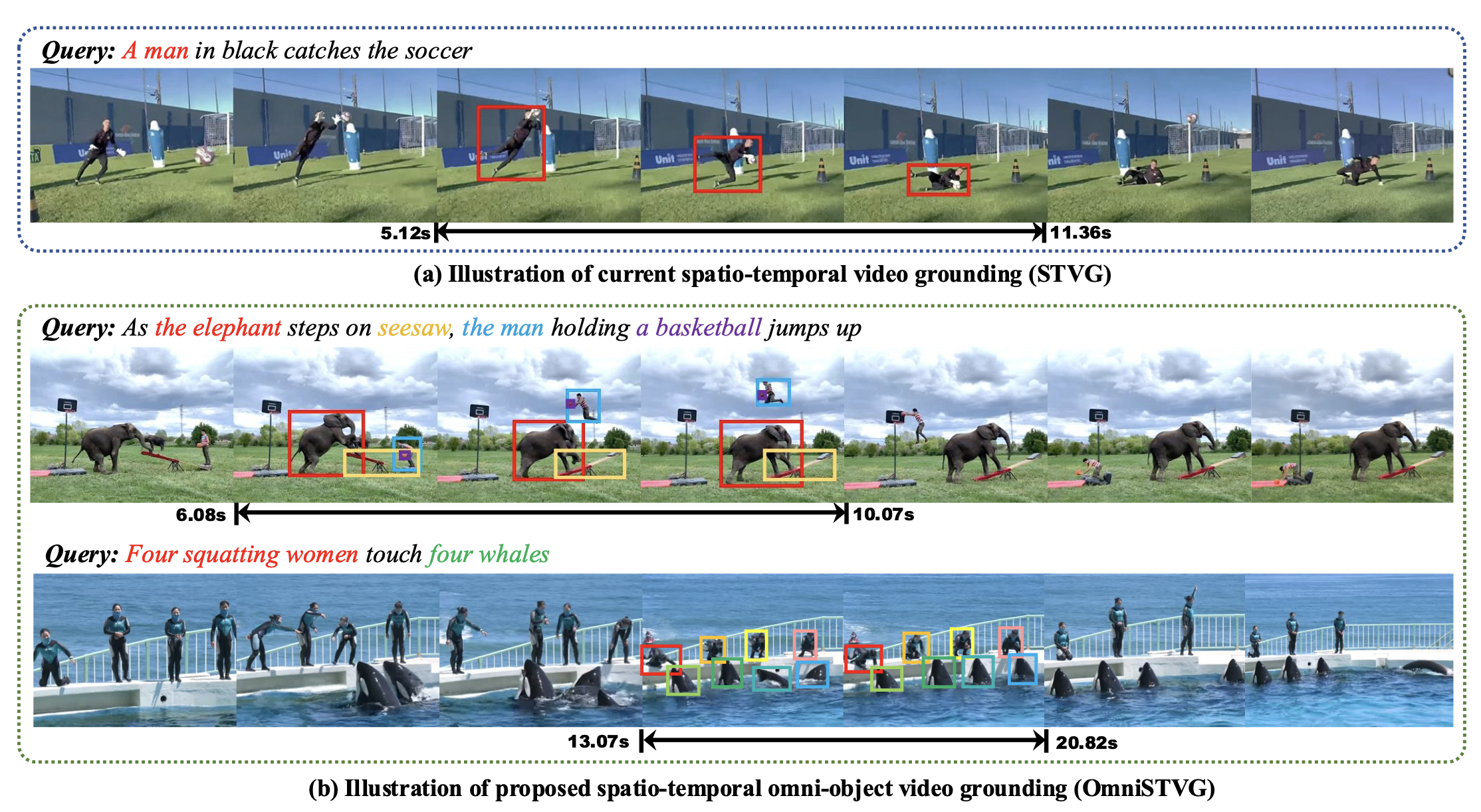
OmniSTVG: Toward Spatio-Temporal Omni-Object Video Grounding
Grounds all objects mentioned in a query, with the BOSTVG benchmark.
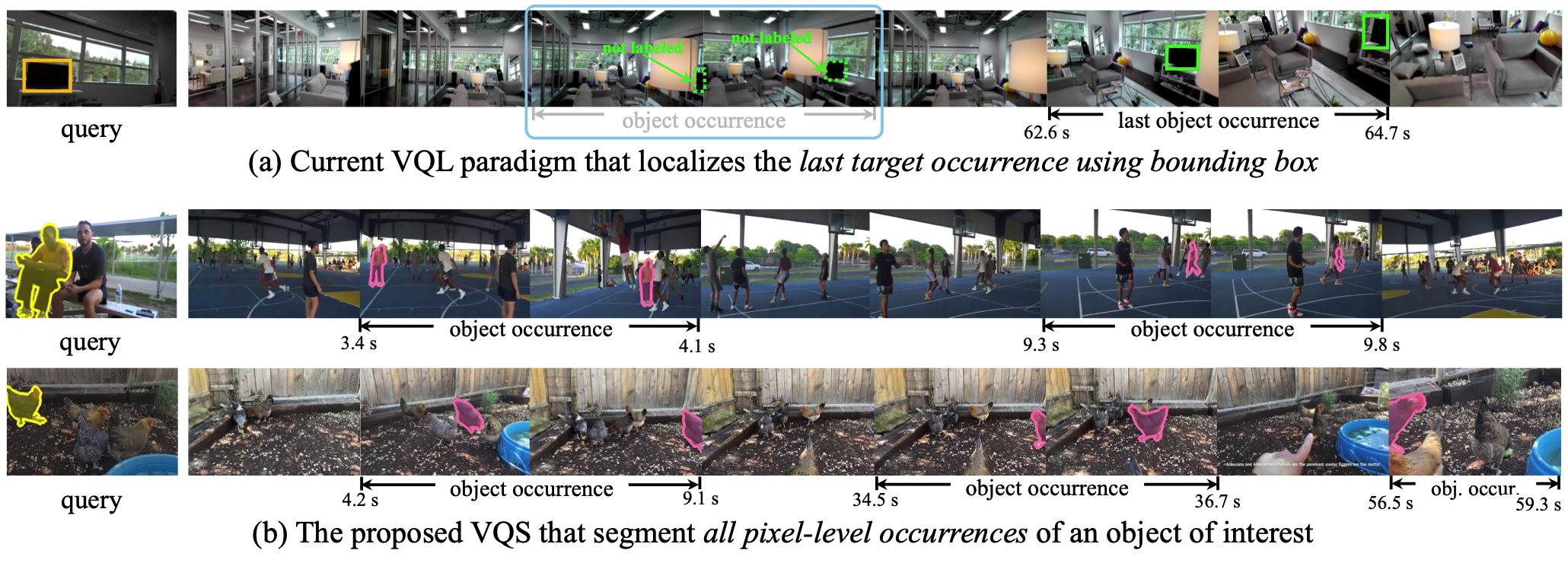
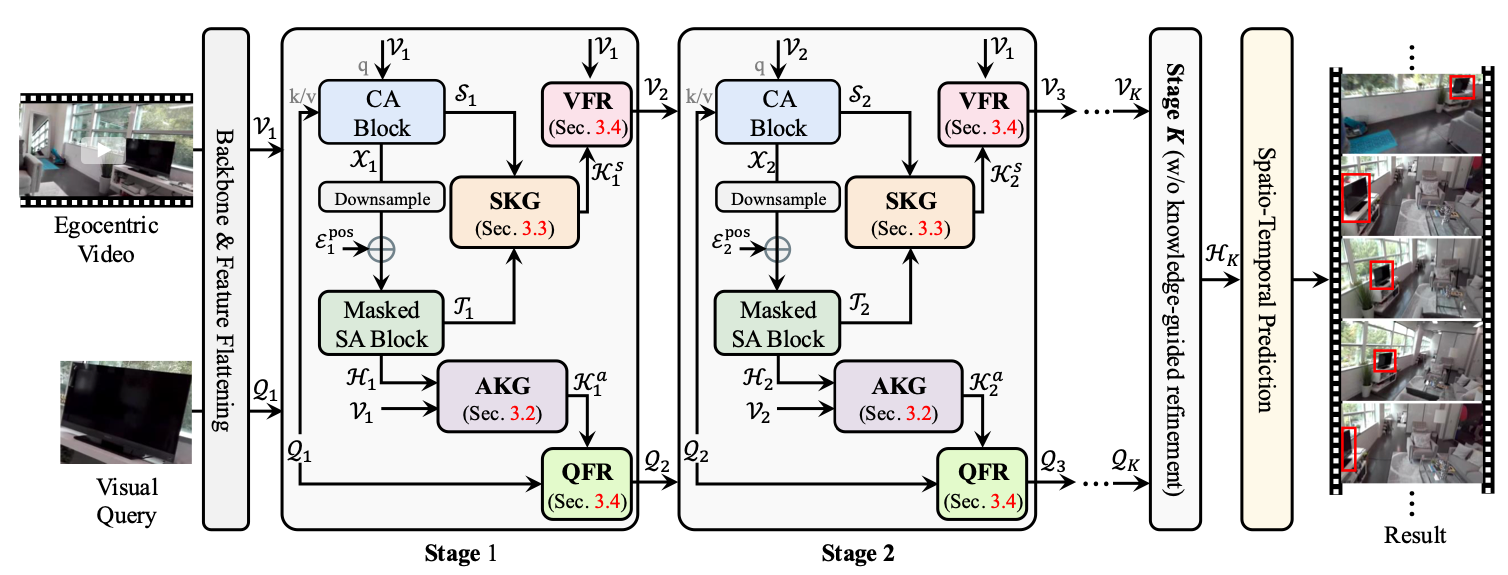
Given an image of an object, the goal is to find where it appears in a long video. I proposed progressive knowledge-guided refinement for egocentric visual query localization (ICCV 2025), and then introduced visual query segmentation with the VQS-4K benchmark, moving from a single box to pixel-level masks of all occurrences (NeurIPS 2026).
Towards Visual Query Segmentation in the Wild
New task of segmenting every occurrence of a visual query in untrimmed videos, with the VQS-4K benchmark.
PRVQL: Progressive Knowledge-Guided Refinement for Robust Egocentric Visual Query Localization
Progressively refines query and video features with target knowledge for egocentric visual query localization.
During my research internship at United Imaging Intelligence, I worked on tracking tissue points through endoscopic video, where deformation, smoke, specular reflection, and occlusion break general-purpose trackers. The approach uses physical constraints and curated trajectories to learn from limited supervision. A paper is in preparation.
- 1st place in both 2D and 3D tracking, MICCAI 2026 STIR Challenge (2D AJ 0.754, 3D AJ 0.694; official results)
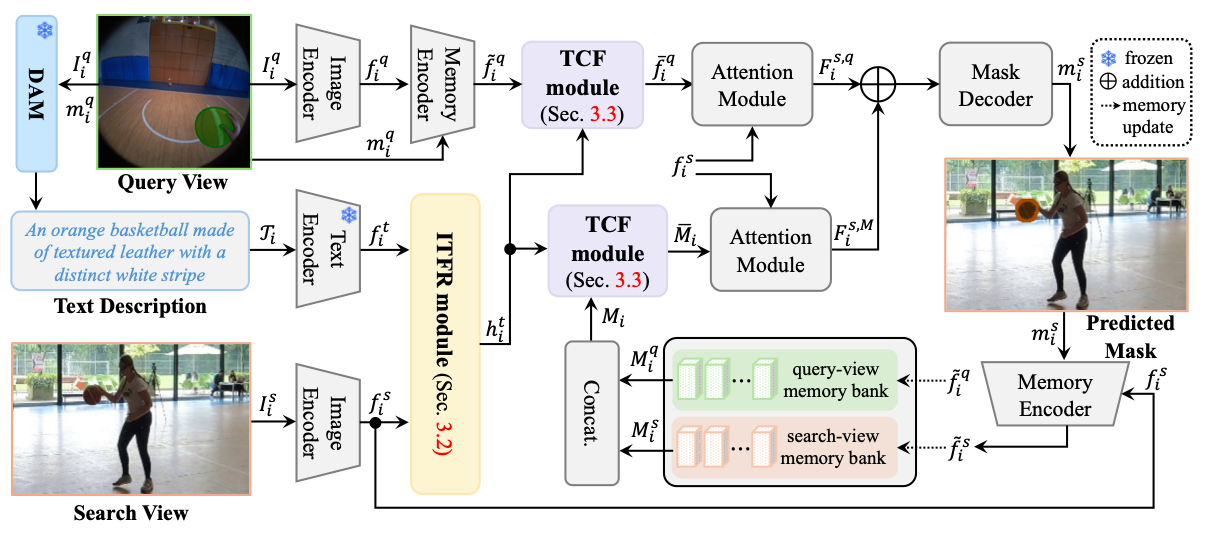
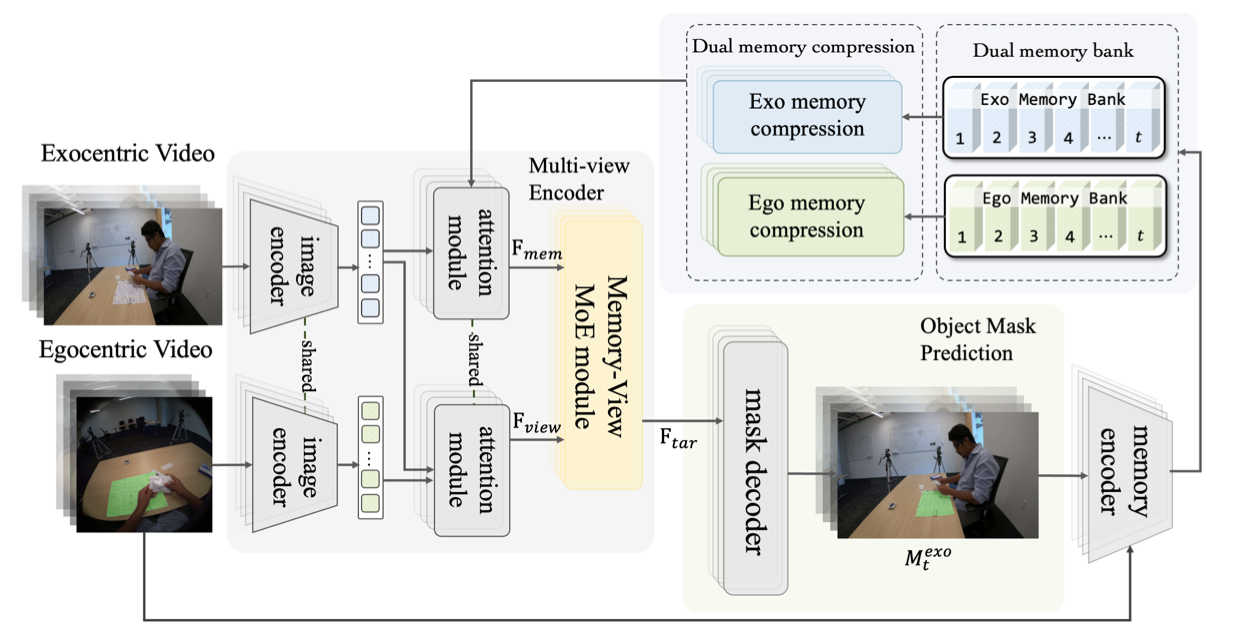
Associating an object seen from a head-mounted camera with the same object in a third-person view requires handling extreme viewpoint change, occlusion, and small objects. I studied long-term memory for ego-exo correspondence (NeurIPS 2025) and then used textual semantics from vision-language models as view-invariant cues (NeurIPS 2026).
Exploiting Textual Semantics for Robust Cross-View Object Correspondence
Uses VLM-generated text descriptions as view-invariant cues for cross-view object correspondence.
Robust Ego-Exo Correspondence with Long-Term Memory
SAM 2-based ego-exo correspondence with Mixture-of-Experts routing and dual long-term memory.
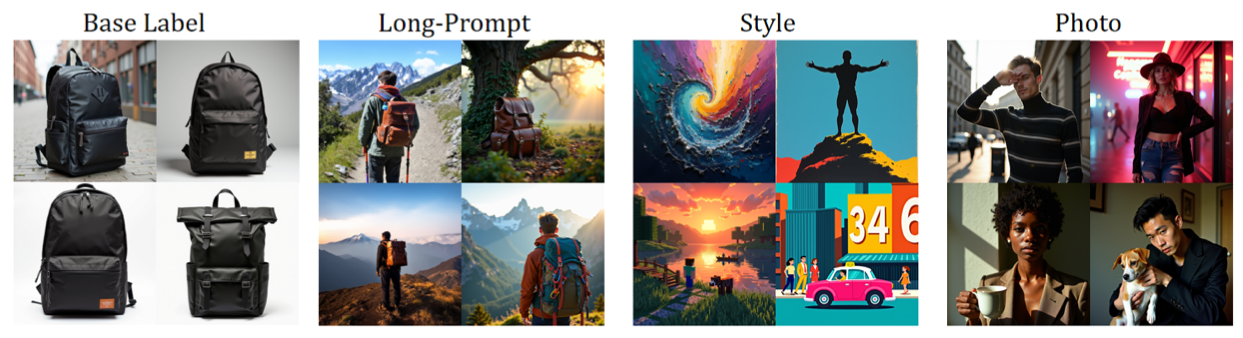
My earlier work studies the robustness of deepfake detectors through anti-forensics, and more recent collaborations address generalizable detection of AI-generated images and multimodal forgery analysis with large language models.
Simplicity Prevails: The Emergence of Generalizable AIGI Detection in Visual Foundation Models
Shows that visual foundation models with simple classifiers give strong, generalizable AI-generated image detection.
Breaking Latent Prior Bias in Detectors for Generalizable AIGC Image Detection
On-manifold adversarial training removes latent-noise shortcuts so AIGC detectors generalize to unseen generators; introduces GenImage++.
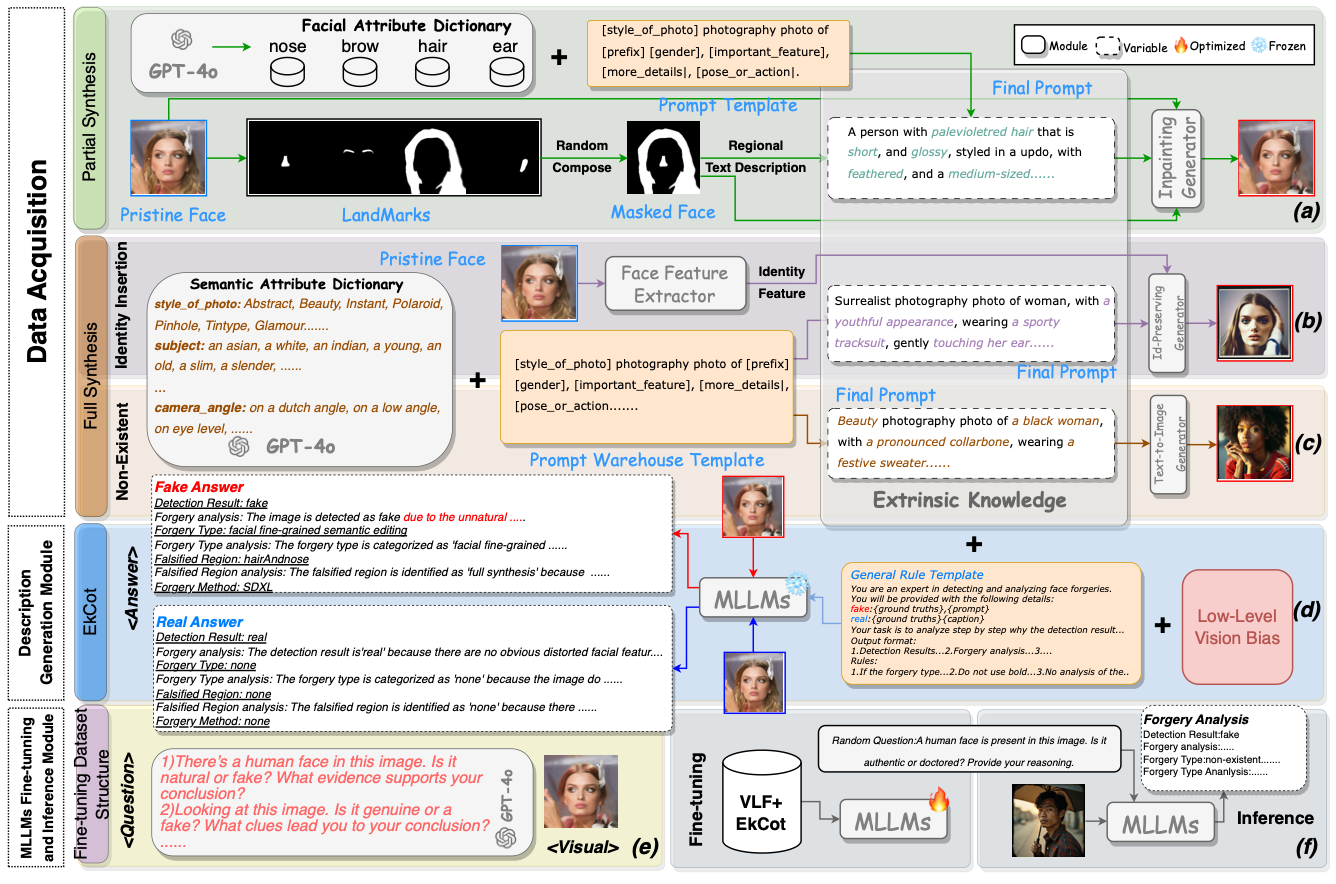
VLForgery Face Triad: Detection, Localization and Attribution via Multimodal Large Language Models
Uses multimodal LLMs to detect, localize, and attribute diffusion-synthesized faces, with the VLF dataset.
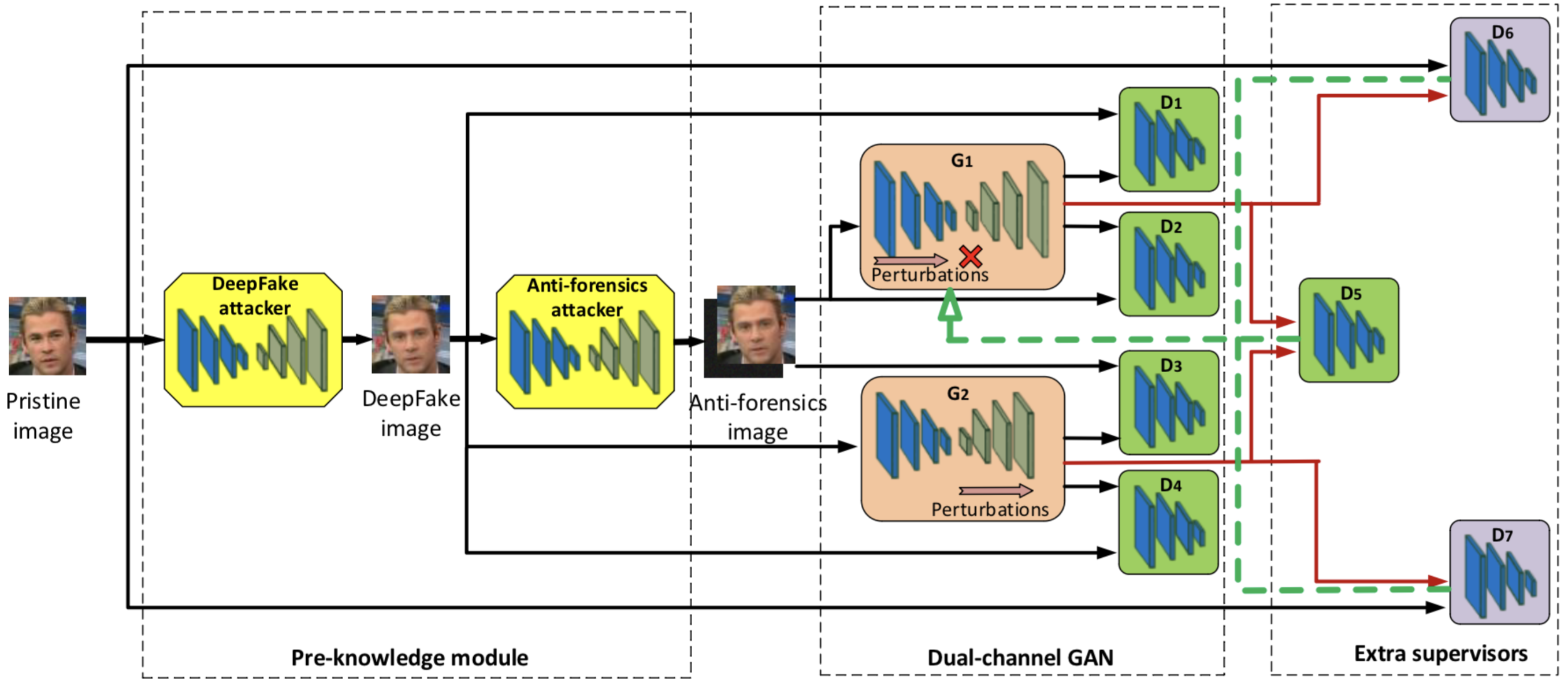
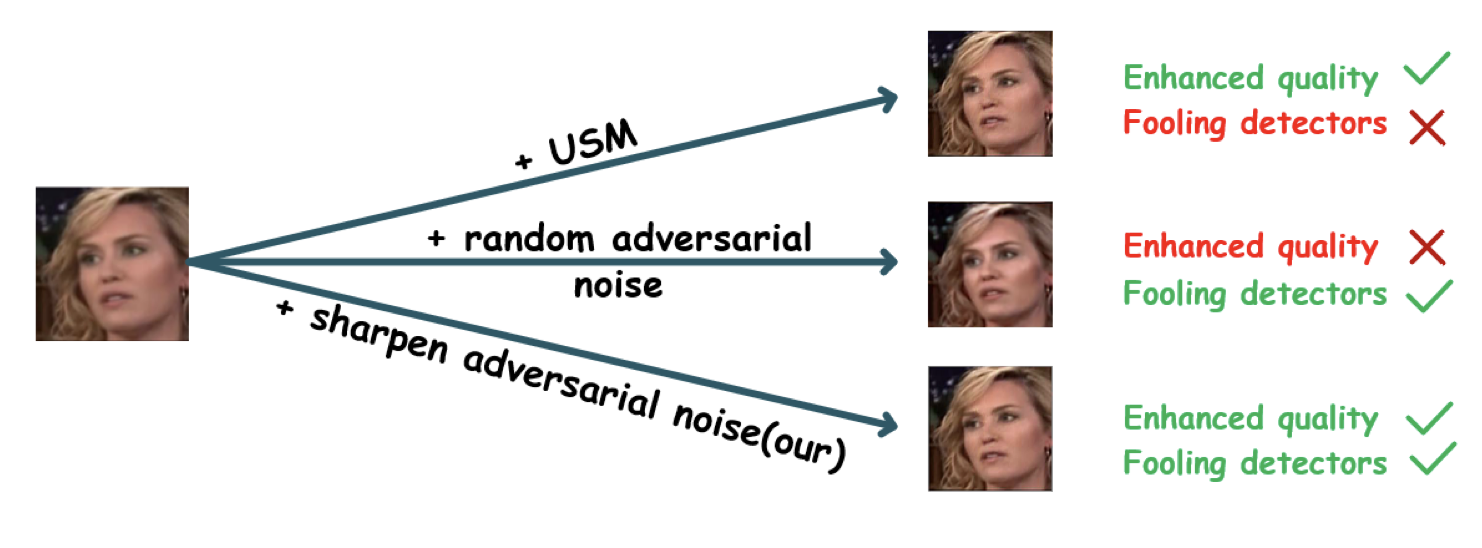
Generating Higher-Quality Anti-Forensics DeepFakes with Adversarial Sharpening Mask
Adversarial sharpening masks that make DeepFakes evade forensic detectors while improving visual quality.
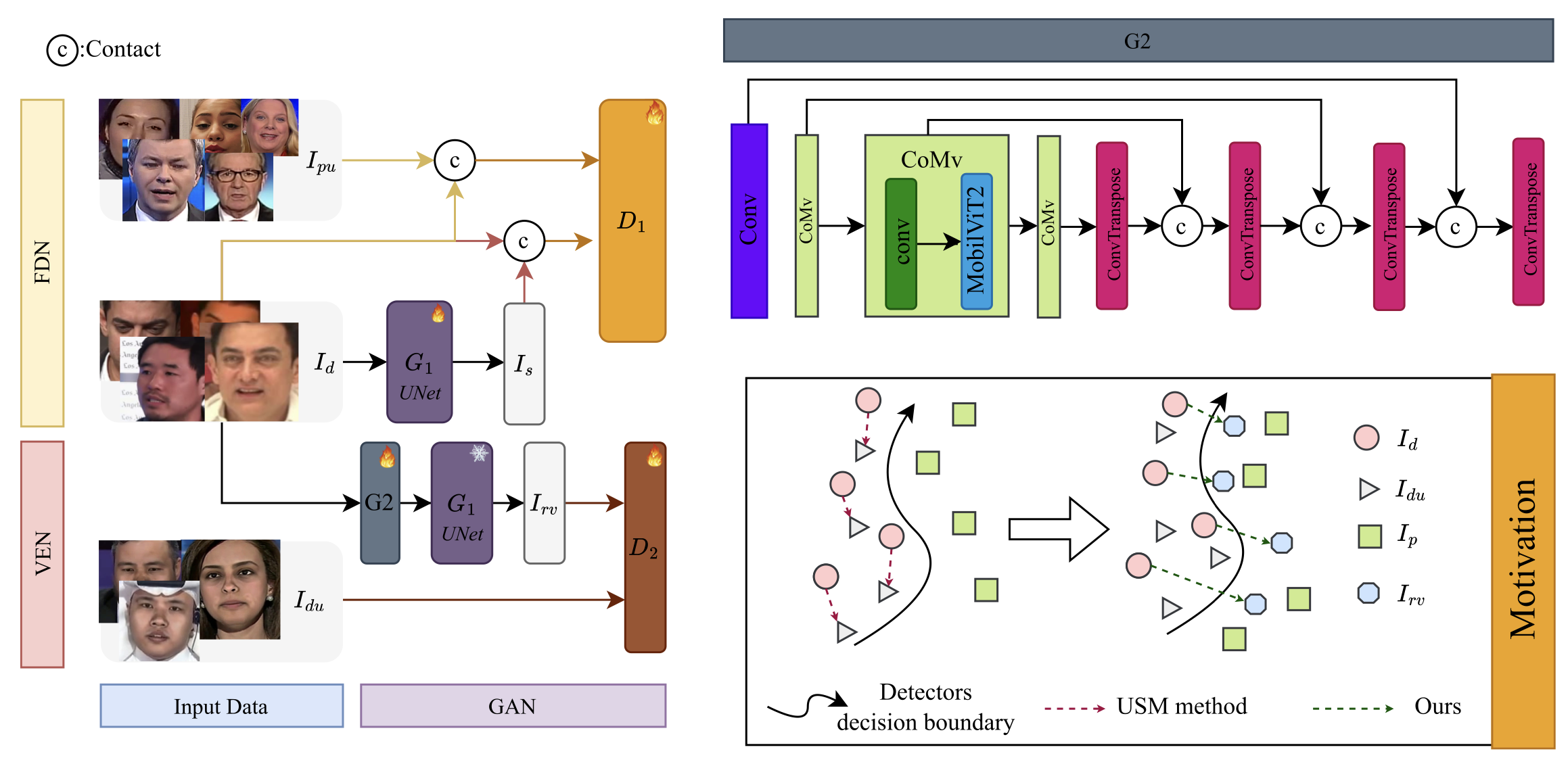
Synthesizing Black-Box Anti-Forensics DeepFakes with High Visual Quality
Black-box anti-forensics attack that disrupts state-of-the-art DeepFake detectors with pleasant sharpening effects.
Securing Facial Bioinformation by Eliminating Adversarial Perturbations
Removes adversarial perturbations from face images to protect facial biometric systems.